
Endocrinología y nutrición en la infección por SARS-CoV-2
DOI:
https://doi.org/10.66737/ier.zub.282Keywords:
COVID-19, diabetes, hyperglucemia, obesity, malnutritionAbstract
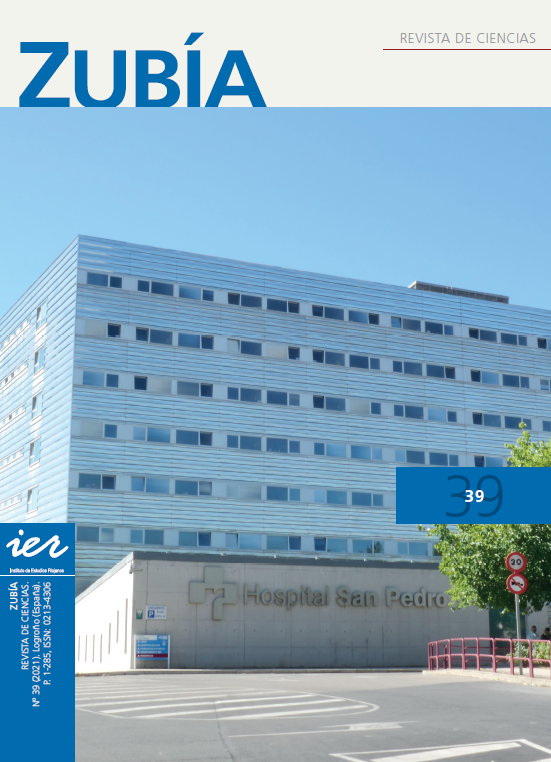
COVID-19 infection has emerged as a new challenge in medicine and can have negative effects on several systems in the human body, including the endocrine system. Endocrine disorders, such as diabetes mellitus, obesity or malnutrition, can, on the other hand, also worsen the severity of the infection, increasing the posibility of serious illness. This paper reviews the interrelation between COVID-19 and several endocrine disorders, based on the data of published studies and on practical experience at San Pedro Hospital in Logroño. Most prevalent patologies like diabetes, thyroid disease, obesity or manlnutrition will be reviewed.
Downloads
References
American Diabetes Association (2021) Summary of Revisions: Standards of Medical Care in Diabetes-2021, Diabetes Care, 44 (Supplement 1), S4–S6.
Ballesteros MD y Bretón I. (2020). Clinical Nutrition in times of COVID-19. Endocrinol. Diabetes Nutr 67:427-430.
Barazzoni R, et al., (2020). ESPEN expert statements and practical guidance for nutritional management of individuals with SARS-CoV2 infection. Clin Nutr 39:1631-1638.
Bode B, et al., (2020). Glycemic characteristics and clinical outcomes of COVID-19 patients hospitalized in the United States. J Diabetes Sci Technol 14:813–821. Bornstein SR, et al., (2020). Practical recommendations for the management of diabetes in patients with COVID-19. Lancet Diabetes Endocrinol 8:546-550. Busetto L, et al., Obesity and COVID-19: an Italian snapshot. Obesity 2020;28:1600-5.
Cai Q, et al., (2020). Obesity and COVID-19 severity in a designated hospital in Shenzhen, China. Diabetes Care 43:1392–1398. Carosi G, et al., (2021). Adrenal insufficiency at the time of COVID-19: a retrospective study in patients referring to a tertiary center. J Clin Endocrinol Metab 106:e1354–1361. Casas JM, et al., (2020). Clinical characteristics of patients hospitalized with COVID-19 in Spain: results from the SEMI-COVID-19 Registry. Revista clínica española. 2020 (8): 480-494.
Casqueiro J, et al., (2012). Infections in patients with diabetes mellitus: a review of pathogenesis. Indian J, Endocrinol. Metab 16(Suppl1): S27–S36.
Deng SQ y Peng HJ. (2019). Characteristics of and public health responses to the coronavirus disease 2019 Ooutbreak in China. J. Clin. Med. 9: 575. Guo W, et al., (2020). Diabetes is a risk factor for the progression and prognosis of COVID-19. Diabetes Metab Res Rev e3319.
Kim T, et al., (2021). BMI as a risk factor for clinical outcomes in patients hospitalized with COVID-19 in New York. Obesity 29: 279-284
Lania A, et al., (2020). Thyrotoxicosis in patients with COVID-19: the THYRCOV study. Eur J Endocrinol 183:381–387.
Lighter J, et al., (2020). Obesity in patients younger than 60 years is a risk factor for Covid-19 hospital admission. Clinical infection diseases. 71(15); 896-897.
McMahon M, et al., (1988). Effects of glucocorticoids on carbohydrate metabolism. Diabetes Metab Rev 4:17–30.
Puig-Domingo M, et al., (2020). COVID-19 and endocrine diesases. A statement from the European Society of Endocrinology. Endocrine 68:2-5
Remuzzi A y Remuzzi G. (2020). COVID-19 and Italy: what next? Lancet; 395:1225–1228.
Sánchez E, el al. (2020). Eating habits and physical activity of the Spanish population during the COVID-19 pandemic period. Nutrients 12:2826-2838.
Scappaticcio L, et al., Impact of COVID-19 on the thyroid gland: an update. (2020). Rev Endocr Metab Disord 25:1-13.
Sociedad Española de Endocrinología y Nutrición (SEEN). (2020). Recomendaciones para enriquecimiento nutricional en personas con pérdida de apetito por infección por COVID-19 [Internet]. Disponible en: https://www.seen.es/portal/contenidos/apartados/detalleApartado.aspx?idTipoApartado=FCUkB6%2fX264tx8sZzRkhIQ%3d%3d&idApartado=PY8uQ0fguH3AV4NXZd78qg%3d%3d&idCategoria=xjiZXq4nvT93tTpKFCzfHw%3d%3d
Soriguer F, et al., (2012). Prevalence of diabetes mellitus and impaired glucose regulation in Spain: the Di@bet.es Study. Diabetología. 55: 88-93.
Wang D, et al., (2020). Clinical characteristics of 138 hospitalized patients with 2019 novel coronavirus–infected pneumonia in Wuhan, China. JAMA. 323:1061-1069.
Williamson EJ, et al., (2020). Factors associated with COVID-19-related death using OpenSAFELY. Nature. 584(7821):430-436. Wu Z y McGoogan JM. (2020). Characteristics of and important lessons from the coronavirus disease 2019 (COVID-19) outbreak in China. Summary of a report of 72 314 cases from the Chinese center for disease control and prevention. JAMA 323:1239-1242.
Downloads
Published
Issue
Section
License
Copyright (c) 2022 Carolina Crespo de Mata, Alejandro Cámara Balda, Julia Campos Fernández, María Jesús Chinchetru Ranedo, Luis Muñoz de Dios, Gonzalo Villar García, María Ángeles Martínez de Salinas Santamaría, Virginia Osés Zárate, Ruth López de Dicastillo Roldán (Autor/a)

This work is licensed under a Creative Commons Attribution-NonCommercial-ShareAlike 4.0 International License.
Los autores que publican en Zubía conservan los derechos de autor de sus trabajos y autorizan a la revista la primera publicación de los mismos.
Los artículos se publican bajo la licencia Creative Commons Atribución–No Comercial–Compartir Igual (CC BY-NC-SA), que permite su uso, distribución y reproducción en cualquier medio, siempre que se cite adecuadamente la autoría original, no se realice un uso comercial y se mantenga la misma licencia.