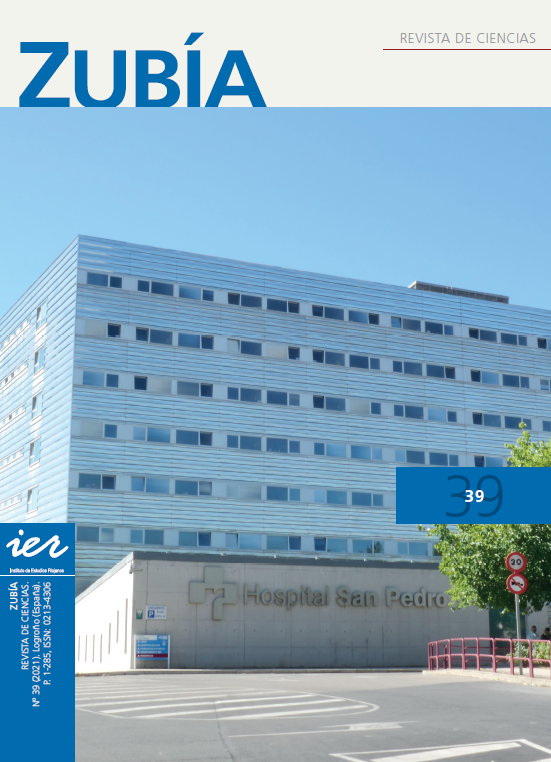
Medicina nuclear en tiempos de pandemia COVID-19
DOI:
https://doi.org/10.66737/ier.zub.291Keywords:
SARS-Cov-2, PET/TC, SPECT, Nuclear MedicineAbstract
The type 2 virus that causes severe acute respiratory syndrome, belonging to the coronavirus family (SARS-Cov-2) was discovered at the end of 2019 in the city of Wuhan, China and has been the cause of the last global pandemic of the that we haven’t gotten rid of yet. The first cases that were declared corresponded to people with severe respiratory distress caused by the infection
of a new infectious agent of the coronavirus family, which was called SARSCov-2. Later, it was found that, although the respiratory manifestations were the initial and sometimes the most serious, the virus could also colonize other body structures and cause their dysfunction. This work collects the findings found in the Nuclear Medicine examinations, caused by SARS-Cov-2 in
patients treated in our San Pedro / CIBIR Hospital Service, as well as those published in scientific journals within our specialty.
Downloads
References
Annunziata, S., Bauckneht, M., Albano, D., Argiroffi, G., Calabrò, D., Abenavoli, E., ... & Laudicella, R. (2020). Impact of the COVID-19 pandemic in nuclear medicine departments: preliminary report of the first international survey. European journal of nuclear medicine and molecular imaging, 47(9), 2090-2099.
Becker, R. C. (2020). COVID-19-associated vasculitis and vasculopathy. Journal of thrombosis and thrombolysis, 50(3), 499-511.
Cabrera Villegas, A., Romero Robles, L. G., Boulvard Chollet, X. L., Albornoz Almada, M., Mangas Losada, M., Garrastachu, P., ... & Delgado Bolton, R. C. (2021). [18F]-FDG PET/CT in oncologic patients with unsuspected asymptomatic infection with SARS-CoV-2. European Journal of Nuclear Medicine and Molecular Imaging, 48(3), 786-793. MEDICINA NUCLEAR EN TIEMPOS DE PANDEMIA COVID-19
Caresia Aróztegui et al., (2020). COVID-19 en la 18F-FDG-PET/TC de pacientes oncológicos: Descripción de los posibles hallazgos, dificultades en la interpretación y recomendaciones sobre el informe: Semnim. Disponible en: https://semnim.es/oncologia/covid-19-en-la-18f-fdg-pet-tcde-pacientes-oncologicos-descripcion-de-los-posibles-hallazgos-dificultades-en-la-interpretacion-y-recomendaciones-sobre-el-informe/
Fotuhi, M., Mian, A., Meysami, S., & Raji, C. A. (2020). Neurobiology of COVID-19. Journal of Alzheimer’s disease, 76(1), 3-19.
Franco-Moreno, A., Muñoz-Rivas, N., Mestre-Gómez, B., & Torres-Macho, J. (2020). Pulmonary embolism and COVID-19: A paradigm change. Revista clinica espanola, 220(7), 459.
Gimelli, A., Rossi, G., Landi, P., Marzullo, P., Iervasi, G., L’abbate, A., & Rovai, D. (2009). Stress/rest myocardial perfusion abnormalities by gated SPECT: still the best predictor of cardiac events in stable ischemic heart disease. Journal of Nuclear Medicine, 50(4), 546-553.
Gnanasegaran, G., Huang, H. L., Williams, J., & Bomanji, J. (2020). Coronavirus pandemic: what nuclear medicine departments should know. Journal of nuclear medicine technology, 48(2), 89-97.
Guedj, E., Campion, J. Y., Dudouet, P., Kaphan, E., Bregeon, F., Tissot-Dupont, H., ... & Eldin, C. (2021). 18F-FDG brain PET hypometabolism in patients with long COVID. European journal of nuclear medicine and molecular imaging, 48(9), 2823-2833.
Heneka, M. T., Golenbock, D., Latz, E., Morgan, D., & Brown, R. (2020). Immediate and long-term consequences of COVID-19 infections for the development of neurological disease. Alzheimer’s research & therapy, 12(1), 1-3.
Montalvan, V., Lee, J., Bueso, T., De Toledo, J., & Rivas, K. (2020). Neurological manifestations of COVID-19 and other coronavirus infections: a systematic review. Clinical neurology and neurosurgery, 194, 105921.
Nishiga, M., Wang, D. W., Han, Y., Lewis, D. B., & Wu, J. C. (2020). COVID-19 and cardiovascular disease: from basic mechanisms to clinical perspectives. Nature Reviews Cardiology, 17(9), 543-558.
Paez, D., Gnanasegaran, G., Fanti, S., Bomanji, J., Hacker, M., Sathekge, M.,... & Abdel-Wahab, M. (2020). COVID-19 pandemic: guidance for nuclear medicine departments. European journal of nuclear medicine and molecular imaging, 47(7), 1615-1619.
Simpson, S., Kay, F. U., Abbara, S., Bhalla, S., Chung, J. H., Chung, M., ... &Litt, H. (2020). Radiological Society of North America expert consensus statement on reporting chest CT findings related to COVID-19. Endorsed by the Society of Thoracic Radiology, the American College of Radiology, and RSNA. Journal of thoracic imaging.
Sollini, M., Ciccarelli, M., Cecconi, M., Aghemo, A., Morelli, P., Gelardi, F., & Chiti, A. (2021). Vasculitis changes in COVID-19 survivors with persistent María Mangas, Leonardo Romero, Xavier Boulvard, Irene García, Puy Garrastachu, Susana Fernández, Ana Corcuera, Beatriz Sampedro, Roberto Delgado, Rafael Ramírez, Antonio Cabrera symptoms: an [18F] FDG-PET/CT study. European journal of nuclear medicine and molecular imaging, 48(5), 1460-1466.
Wang, F., Kream, R. M., & Stefano, G. B. (2020). Long-term respiratory and neurological sequelae of COVID-19. Medical science monitor: international medical journal of experimental and clinical research, 26, e928996-1.et al.
Downloads
Published
Issue
Section
License
Copyright (c) 2022 María Mangas Losada, Leonardo Romero Robles, Xavier Boulvard Collet, Irene García Megías, Puy Garrastachu Zumarán, Susana Fernández García, Ana Corcuera Cantabrana, Beatriz Sampedro Crespo, Roberto Delgado Bolton, Rafael Ramírez Lasanta, Antonio Cabrera Villegas (Autor/a)

This work is licensed under a Creative Commons Attribution-NonCommercial-ShareAlike 4.0 International License.
Los autores que publican en Zubía conservan los derechos de autor de sus trabajos y autorizan a la revista la primera publicación de los mismos.
Los artículos se publican bajo la licencia Creative Commons Atribución–No Comercial–Compartir Igual (CC BY-NC-SA), que permite su uso, distribución y reproducción en cualquier medio, siempre que se cite adecuadamente la autoría original, no se realice un uso comercial y se mantenga la misma licencia.